Self-portraits by young people growing up with cancer

Image
Photo by Sophie Cassar (CC BY-NC-ND 3.0)

Growing Up With Cancer is an innovative project using research and creative practice to understand the experience of having cancer during adolescence and young adulthood. Funded through an Australian Research Council Linkage Grant (LP0883632), it brought together researchers, artists, advocates and clinicians at the Centre for Values, Ethics and the Law in Medicine at the University of Sydney, the University of Newcastle, the Children’s Hospital at Westmead, and CanTeen – the Australian Organisation for Young People Living with Cancer.

During 2010 and 2011, 27 young people participated in interviews about the nature and extent of the impact of cancer on the transition from adolescence to adulthood. Of these, 19 collaborated with artist Kris Smith or worked on their own, to produce a self-portrait that represented them and the impact of cancer on their experience of growing up.

In September 2012, we launched a series of exhibitions of these beautiful, poignant, strong, funny, and thought-provoking images. These exhibitions will be happening across the country in 2012 and 2013. We invite the general public to come and celebrate the creative expression of these young people’s experiences of growing up with cancer.

Exhibition Dates and Venues:

September 25 – October 15: Riverside Theatres, Parramatta LAUNCH 6 October
October 17 – November 7: Xavier Space at Saint Vincent’s Hospital, Darlinghurst
November 12 – December 8: Children’s Hospital at Westmead
December – January: The Rocks Pop-up venue, Sydney
February 18 – 22: Fed Square, Melbourne LAUNCH tba
March: Peter MacCallum Cancer Centre, Melbourne
May: Downing Centre Display Cases, Sydney

Check out our Growing Up with Cancer project webpage for up to date information

Who are you? What kind of truth does your genetic profile tell about you?

The Assembled Self is a project I’m developing with colleagues Estelle Noonan, Brigid Costello, Ian Kerridge and David Sillence. It is about the experience of genotyping (genetic testing) and how this affects an individual’s sense of self. It is driven by our interest in how genetic testing alters the narratives through which people anchor their own, their families, and their communities’ identities. The project involves a collaboration of researchers and artists conducting a creative research project where artists produce new works (phase 1) to be presented to generate public conversations around genetic testing and identity (phase 2).

On 18th August we held a research development workshop with researchers and Sydney-based to think through these ideas. It was a fascinating day with amazing artists, challenging ideas and lots of tricky issue to solve for our grant application.

Watch this space!

My Family Planning tour

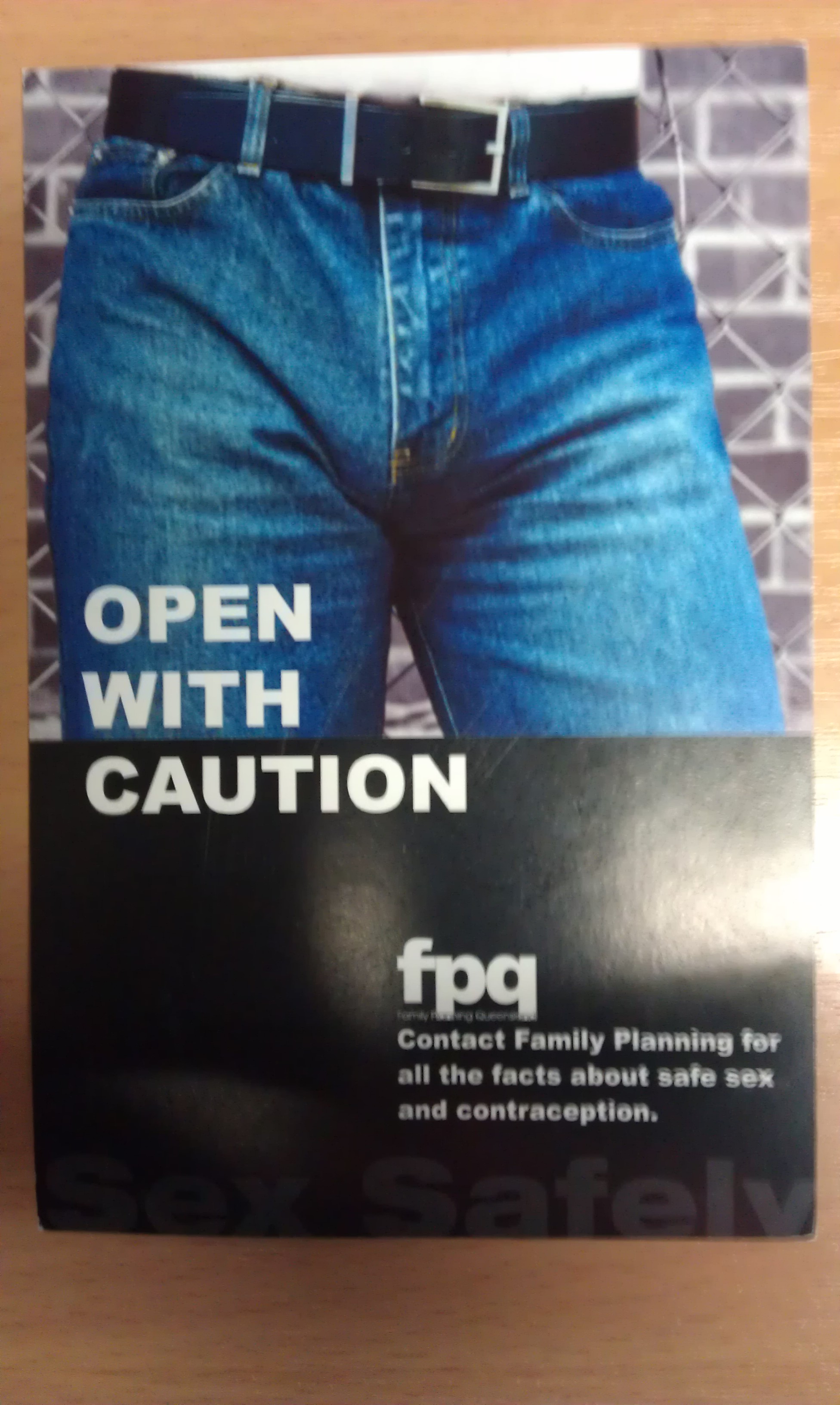
I’m currently travelling around the country conducting focus groups in family planning clinics. I’m working with people from Kirby Institute and Family Planning NSW and Queensland. I’m really enjoying it. The people who work at FP are just lovely and I’m learning a lot about how FP works (in particular about chlamydia testing). As an added bonus I’m getting to see local STI campaigns. Here are a few so far:

ImageImageImage

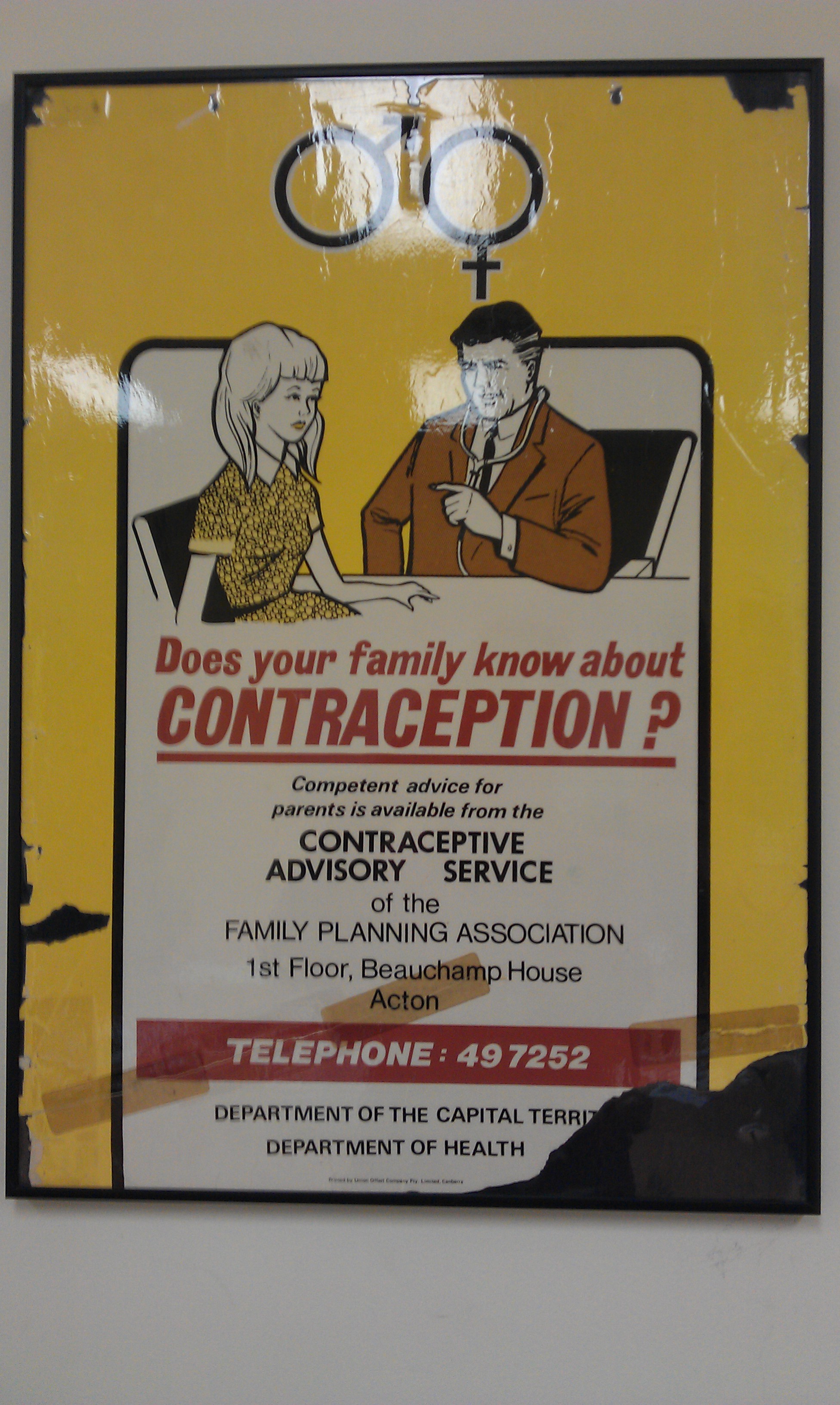
And some retro classics (70s) promoting contraception:

ImageImageImage

Questions in the house about lesbian and bisexual women’s health

21 June 2012, Ms Clover Moore (Member of the New South Wales Legislative Assembly (until September 2012) and Lord Mayor of the City of Sydney) asked a question of Jillian Skinner (Minister for Health, and Minister for Medical Research):

“With respect to the joint Sydney University and ACON “Health Check – Sydney Women and Sexual Health” survey which identified that marginalisation and invisibility result in higher rates for some health conditions and lower rates of help seeking:

  • What key health concerns were identified in the Sydney Women and Sexual Health survey?
  • What action has been taken to ensure that all health services acknowledge and provide appropriate treatment to lesbian women?
  • What action has been taken to ensure that lesbian women are aware of health issues and treatments, and seek treatment?
  • What action has been taken to address:
    – lower rates of cervical cancer screening;
    – problematic alcohol, tobacco and other drug use;
    – mental health support;
    – violence against lesbians including domestic⁄family violence;
    – obesity and overweight concerns?
  • What changes have been made to health services in the inner city based on these findings?
  • What support does the Government provide to specialist lesbian health services and programs?
  • What further action does the Government propose to address these concerns?

 
26 July 2012, Jillian Skinner responded:

“I am advised:

(1), (5) and (7) Summary results of “Health Check – Sydney Women and Sexual Health Survey 2010” are available at http:⁄⁄www.acon.org.au⁄sites⁄default⁄files⁄SWASH%20Report%20Card.pdf

(2) and (3) NSW Health’s services acknowledge and provide appropriate treatment to all patients regardless of their sexual orientation.

(4) (a) Initiatives undertaken by the NSW Cervical Screening Program include:

  • implementation of a mass media social marketing campaign, Peace of Mind.
  • new reminder strategies targeting women who participate in cervical screening outside the recommended two-year period, including in collaboration with general practitioners.
  • redevelopment of the Program website to ensure it is engaging, accessible, culturally appropriate and supports key promotional strategies, includes an enhanced Pap test provider search tool and a message recommending to lesbians and other same-sex attracted women to participate in biennial screening for cervical cancer.

The Cancer Institute NSW has made available to health professionals and community groups a brochure, Lesbians need Pap tests too, which addresses misconceptions that may prevent lesbians and other same-sex attracted women from participating in screening for cervical cancer.

(b)

  • The NSW Tobacco Strategy 2012-2017 sets out the broad range of Government action to reduce the harm associated with tobacco use.
  • The Opioid Treatment Program provides assessment, treatment, and referral services to an already marginalised drug-using population, around a third of whom are women.
  • The NSW Health Club Drugs campaign targets the Gay, Lesbian, Bisexual and Transgender (GLBT) community and raises awareness of the risks and harms associated with the use of “Club drugs” which include ecstasy, methamphetamine (speed, base, crystal, ice), cocaine and GHB.
  • There are a number of drug and alcohol treatment services that target women, both in the government and non-government sector. There are a number of residential rehabilitation services specifically for women within NSW. These treatment programs may include beds for women and their children, as well as women participating in the diversion programs – MERIT and Drug Court.

(c) ACON has developed a Mental Health and Wellbeing Strategy 2010-13 to support their work to promote mental health and wellbeing, and reduce the impact of mental health problems on GBLT communities through direct activity, partnerships and service development.

NSW Health provided funding of $450,000 under the NGO Grant Program for the ACON Peace of Mind Mental Health Literacy Project, from 1 January 2011 to 30 June 2012, with two primary aims:

  • To develop and pilot a mental health information and promotion program (adapted from an existing recognised evidence based training package) to ensure relevance and specificity for GLBT communities.
  • To develop and implement a strategic promotion and partnership campaign.

Workshops have been held to pilot the training package. Further information is available on the ACON website: http:⁄⁄www.acon.org.au⁄home

(d) NSW Health’s response to violence against lesbians is guided by the NSW Strategic Framework 2007-2012 Working Together: preventing violence against GLBT people and the NSW Health Policy and Procedures for Identifying and Responding to Domestic Violence 2003.

Local Health Districts undertake a range of actions including targeted activities such as community information resources, and activities incorporated into other relevant policies and strategies such as workplace bullying and harassment policies.

NSW Health’s Education Centre Against Violence (ECAV) provides training for health staff and interagency partners on working with clients in same sex relationships who experience domestic violence.

(e) NSW 2021 sets out targets to reduce overweight and obesity in children and adults. The NSW Ministry of Health has commenced the preparation of a new cross government overweight and obesity plan.

(6) The NSW Government provides funding to ACON through the NSW Ministry of Health Non Government Organisation Grant Program to support programs to prevent the transmission of blood-borne viruses and sexually transmissible infections in lesbian and same-sex attracted women.”

Women’s Western Australian Sexual Health (WWASH) Survey 2010


I am super excited at the arrival of the final report coming out of the 2010 Women’s Western Australian Sexual Health (WWASH) Survey. This is the Perth version of the Sydney Women and Sexual Health (SWASH) survey – same survey questions, different location – which we (Rachel Deacon and myself) conducted with Jude Comfort of the WA Centre for Health Promotion Research at Curtin University. The report includes comparative stats between Perth and Sydney; the first time this kind of work has ever been done in Australia (because we have big enough numbers). Report available here.


At the intersection of two marginalised identities – conference paper

At the 12th Social Research Conference on HIV, Hepatitis C and Related Diseases, Sydney today, watching my colleague Rachel Deacon presented our paper “At the intersection of two marginalised identities: Lesbian, gay, bisexual and transgender people’s experiences of injecting drug use and hepatitis C seroconversion”

Abstract:

Introduction: Although international research shows higher levels of injecting drug use and hepatitis C virus (HCV) infection among lesbian, gay, bisexual and transgender (LGBT) populations, there is limited social research on the experiences of LGBT people who inject drugs (PWID) or live with HCV.

Approach: An Australian qualitative study of understandings and experiences of HCV in people provided an unexpected data set of 8 LGBT injectors living with hepatitis C. This paper presents findings of an opportunistic thematic analysis of these data.

Findings: We argue that same-sex relationships as a social context for injecting has important implications for health promotion and health provision around risk reduction practices, understanding initiation to injecting, injecting as a relationship practice in creating intimacy, and relationships as a source of support during HCV or drug treatment. Many of our participants described tensions around their place in two communities, an LGBT community and a community of people who injects drugs. The loss of connection to a chosen community means the absence of vital support networks, which may place additional stressors on those considering HCV or drug treatment.

Implications: We argue that meeting the needs of this population involves health professionals developing relationships with LGBT community health organisations, and developing capacity in providing LGBT health care, while LGBT community organizations must raise awareness of hepatitis C in LGBT communities. It is vital that we reduce stigma and potentially negative consequences for people whose experiences exist at the intersection of these two marginalised identities.

Why LBQ women don’t use dental dams: Australian research on LBQ women’s sexual health

I had the pleasure of presenting at ACON’s Big Day In. ACON is NSW’s largest community-based gay, lesbian, bisexual and transgender (GLBT) health and HIV/AIDS organisation; Big Day In is their annual staff development day. I turned up early to see the L Panel – several of the organisation’s fierce women who work across programs on lesbian and same-sex attracted women health. It was led by the lovely Alan Brotherton – who chairs ACON’s Lesbian Advisory Committee. My role for the day was to give a presentation on some of the work I’ve been doing in LBQ women’s health. I wanted to talk about: What we know about sexual behaviour and sexual health in LBQ women and women’s perceptions of STI risk, and then facilitate a discussion about what these research findings mean for health promotion.

Check out the slides

Experimenting with creative research methods for young people

Yesterday we made our last trip out west to run focus groups with healthy school kids about cancer and young people (for the Growing Up with Cancer project). We asked them to work in small groups to develop and perform a 3 minute current affairs/news style presentation about a young person their age that has cancer. Over 3 focus groups with high school drama students we saw lots of performances, ranging from the expected (sad) to the wild (cancer jokes!). Our motivation was to use methods that would break open the usual victims and heroes discourses about cancer in young people. And it worked. An awesome data generation technique, an enthusiastic group of students and a supportive school and teacher.

Get inspired to think more creatively about methods of data generation here Art Lab and David Gauntlett

Young Women’s Health Study Cambodia article

Our latest paper from the Young Women’s Health Study (YHWS) in Cambodia, has just been accepted by the Harm Reduction Journal. It’s open access so the provisional PDf is up – just click on the paper title.

Maher, L, Mooney-Somers, J, Phlong, P,  Couture, MC, Stein, E, Evans, J, Cockroft, Sansothy, NC, Nemoto T, and Page, K.(2011) Selling sex in unsafe spaces: Sex work risk environments in Phnom Penh, Cambodia. Harm Reduction Journal.

Abstract:
Background: The risk environment framework provides a valuable but under-utilised heuristic for understanding environmental vulnerability to HIV and other sexually transmitted infections among female sex workers. Brothels have been shown to be safer than street-based sex work, with higher rates of consistent condom use and lower HIV prevalence. While entertainment venues are also assumed to be safer than street-based sex work, few studies have examined environmental influences on vulnerability to HIV in this context.

Methods: As part of the Young Women’s Health Study, a prospective observational study of young women (15-29 years) engaged in sex work in Phnom Penh, we conducted in-depth interviews (n=33) to explore vulnerability to HIV/STI and related harms. Interviews were conducted in Khmer by trained interviewers, transcribed and translated into English and analysed for thematic content.

Results: The intensification of anti-prostitution and anti-trafficking efforts in Cambodia has increased the number of women working in entertainment venues and on the street. Our results confirm that street-based sex work places women at risk of HIV/STI infection and identify significant environmental risks related to entertainment-based sex work, including limited access to condoms and alcohol-related intoxication. Our data also indicate that exposure to violence and interactions with the police are mediated by the settings in which sex is sold. In particular, transacting sex in environments such as guest houses where there is little or no oversight in the form of peer or managerial support or protection, may increase vulnerability to HIV/STI.

Conclusions: Entertainment venues may also provide a high risk environment for sex work. Our results indicate that strategies designed to address HIV prevention among brothel-based FSWs in Cambodia have not translated well to street and entertainment-based sex work venues in which increasing numbers of women are working. There is an urgent need for targeted interventions, supported by legal and policy reforms, designed to reduce the environmental risks of sex work in these settings.  Future research should seek to investigate sex work venues as risk environments, explore the role of different business models in mediating these environments, and identify and quantify exposure to risk in different occupational settings.

ACON presents some SWASH findings at APSAD

ACON’s Alcohol and Other Drugs Program team presented some findings from SWASH (the Sydney Women and Sexual Health survey, which I help run), at the Australasian Professional Society on Alcohol and other Drugs Conference in Hobart.

Great poster and so exciting to see the SWASH findings getting out there:

Have a look at ACON’s new web-based harm reduction campaign, Our Word of Mouth , or watch the first vid in the series below