The last outing for the Growing Up with Cancer project

In July, my Growing Up with Cancer (GUWC) project colleague Peter and I attend the 8th International Conference on Teenage and Young Adult Cancer Medicine. It was held at the Royal Society of Medicine in London and what a glorious venue for this project’s last outing!

The conference organisers staged a full exhibition of the Growing Up with Cancer self-portraits (experience all the artworks here) and featured the project in the conference programme.

GUWC self-portraits on show at the International Conference on Cancer in Teenagers and Young Adults

We also presented three conference posters on the research process and the project findings. (If you’d like to quote or use these posters – please acknowledge them correctly)

What healthy young people think about youth cancer – Mooney-Somers, J & Lewis, P. “Little Annabel Harvey and her fight with cancer”: healthy young people’s representations of youth cancer. 8th International conference on teenage and young adult cancer medicine, London July 2104

Using creative methods in research with young people – Mooney-Somers, J & Smith, K. Beyond the Illustration of Research Data: Using professionally facilitated image making techniques to enable participants to describe, enhance and extend data originally captured using traditional text-based methods of research. 8th International conference on teenage and young adult cancer medicine, London July 2104 

Telling friends and partners that you had cancer – Lewis, P & Mooney-Somers, J. Becoming a survivor – young people disclosing cancer to new acquaintances and romantic partners. 8th International conference on teenage and young adult cancer medicine, London July 2104


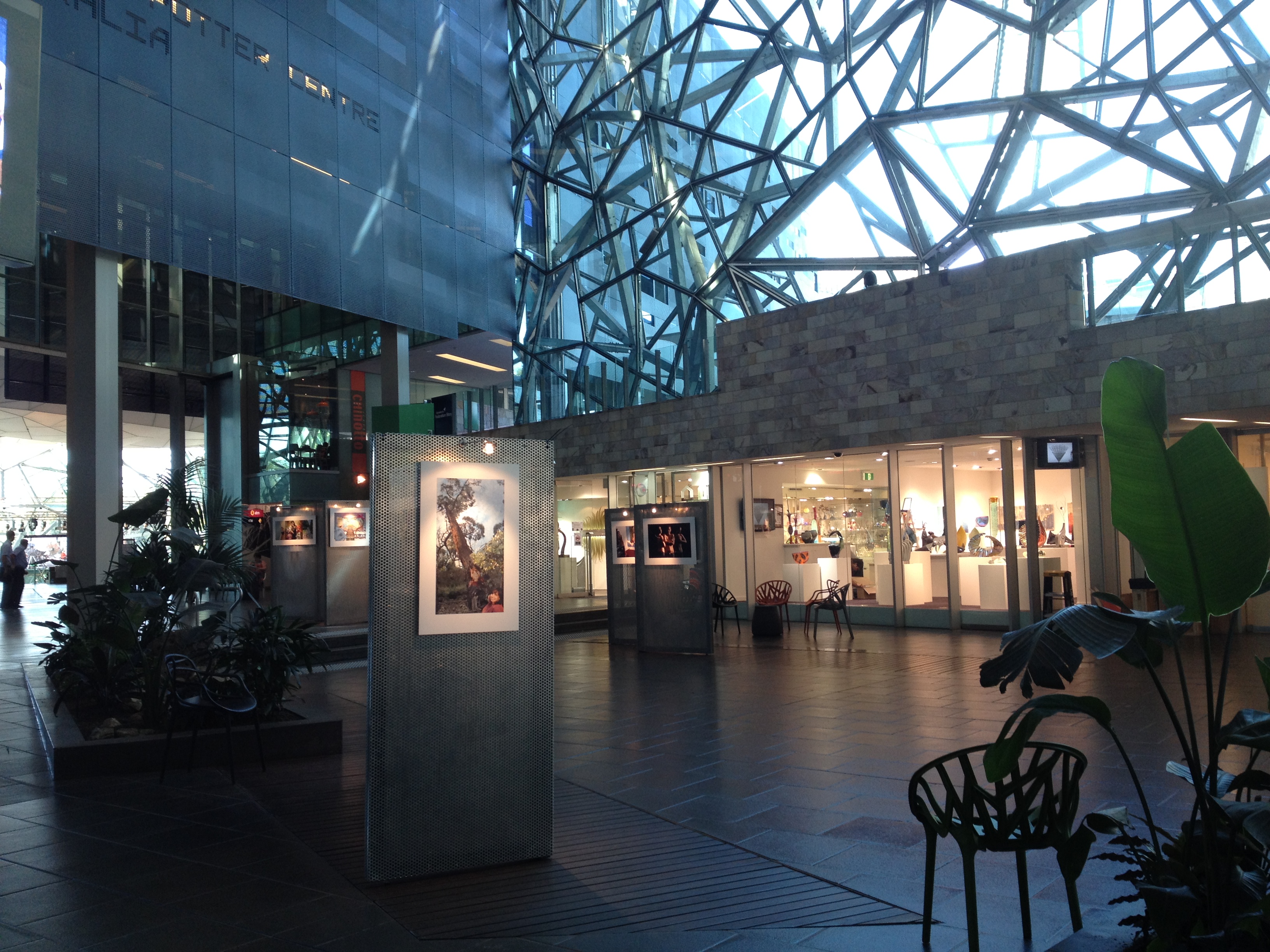
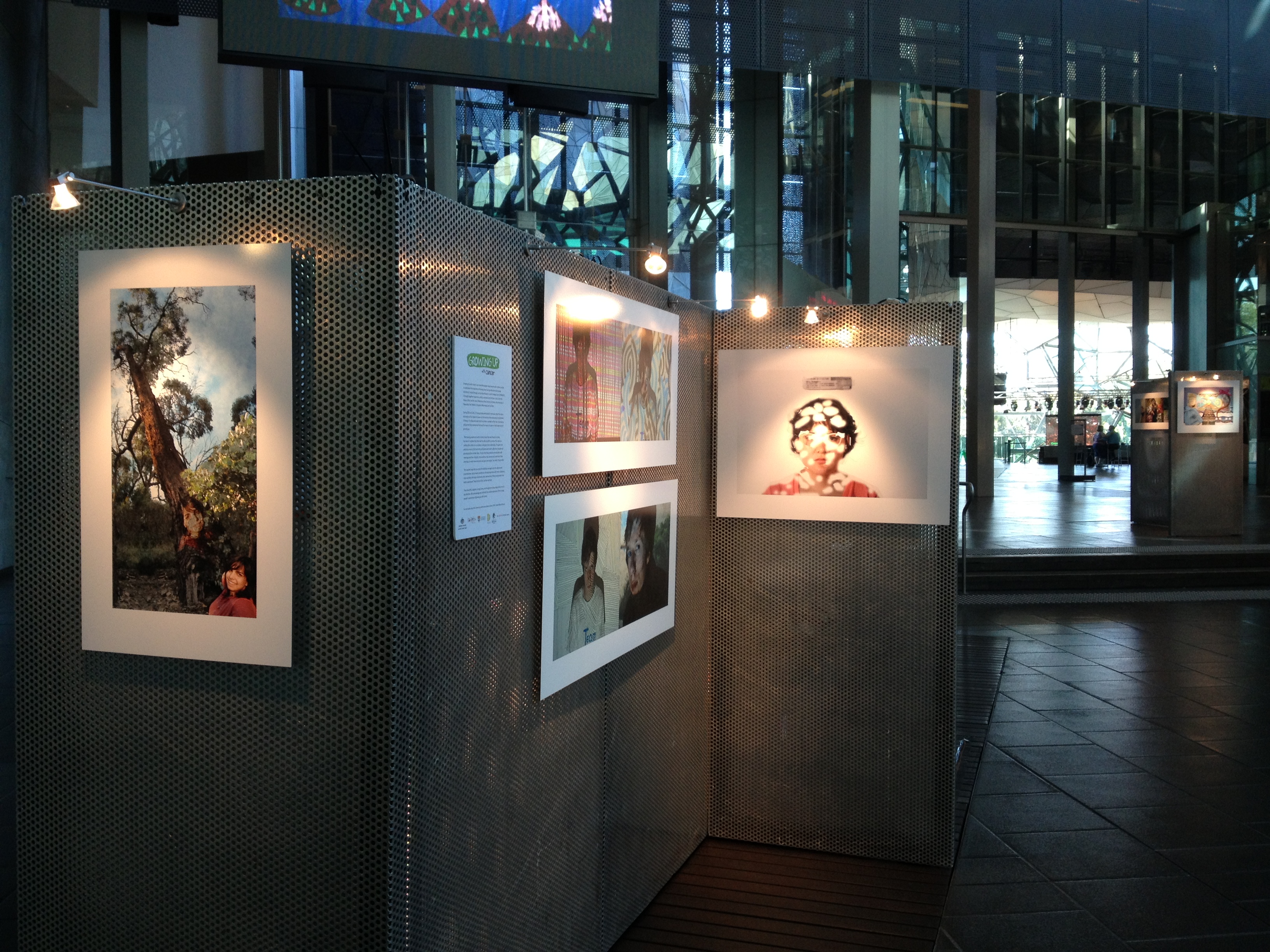
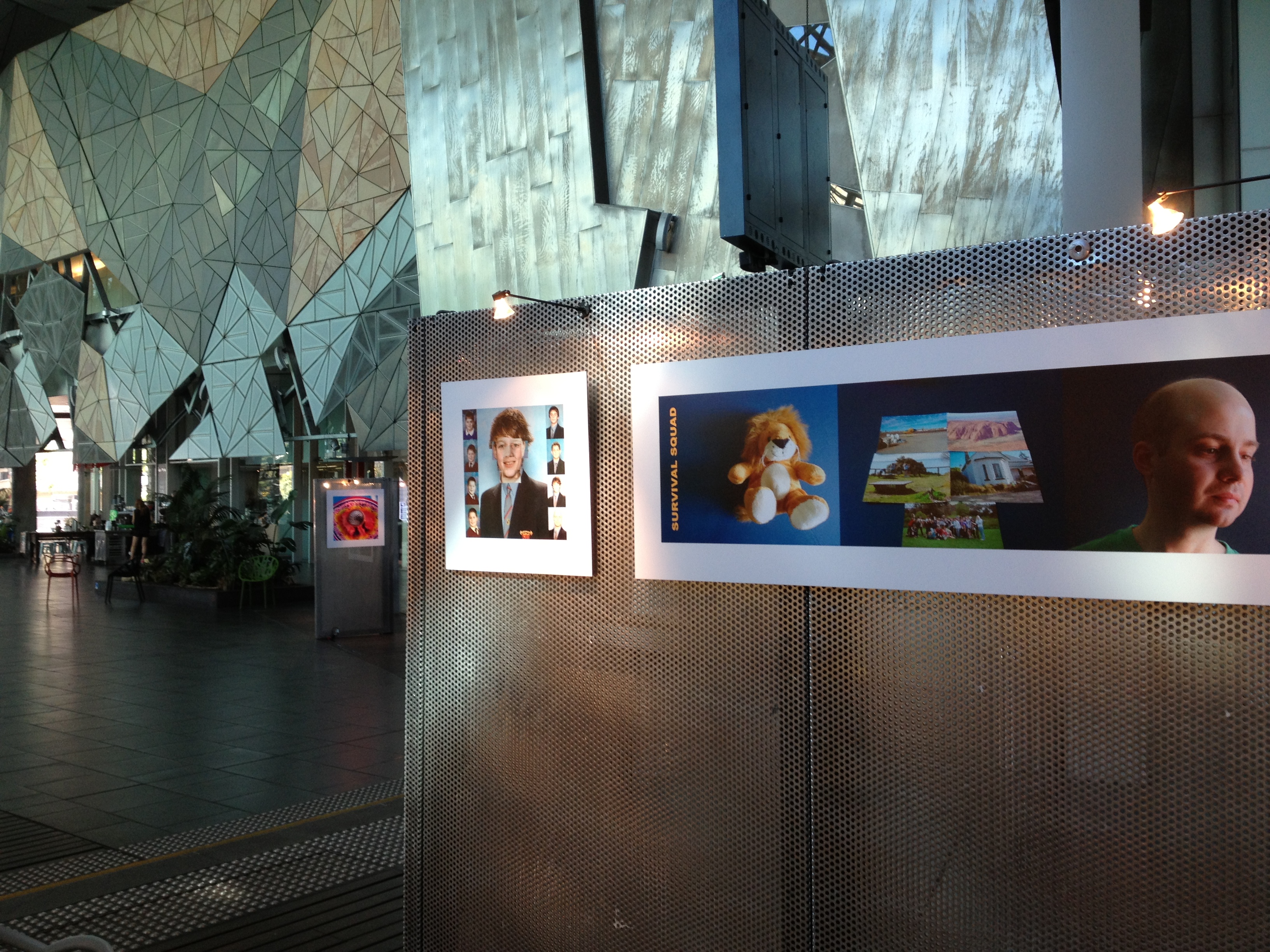
Growing Up with Cancer self-portrait exhibition at Federation Square

This week the Growing Up with Cancer self-portraits are spending a week at Federation Square, Melbourne. This amazing venue gave the exhibition a whole new audience as school groups, tourists and lunching office workers made their way through the Fed Sq complex or to the Ian Potter Museum.

Two of the artist-participants (with proud mums and dads and kids) attended the Tuesday launch. We heard speeches from Michael Carr-Gregg (adolescent psychologist and long-time CanTeen supporter), Lachlan Korvin (CanTeen patient member and board member), Melia Bartholomeusz (GUWC participant and artist) and Peter Lewis (on behalf of GUWC team).

   GUWC at Fed Sq   GUWC at Fed Sq    GUWC at Fed SqGUWC at Fed Sq

The exhibition is now at the Peter MacCallum Cancer Centre (in time for the “Bridging the Gap: Meeting the needs of adolescents and young adults (AYA) wherever they receive Treatment” conference). It will be back in Sydney in May for a month at the Downing Centre.

An electronic copy of the exhibition catalogue is available here; or email me for a printed version.

Special thanks to Sandy Bliim who flew back from Nauru to set things up!


Experimenting with creative research methods for young people

Yesterday we made our last trip out west to run focus groups with healthy school kids about cancer and young people (for the Growing Up with Cancer project). We asked them to work in small groups to develop and perform a 3 minute current affairs/news style presentation about a young person their age that has cancer. Over 3 focus groups with high school drama students we saw lots of performances, ranging from the expected (sad) to the wild (cancer jokes!). Our motivation was to use methods that would break open the usual victims and heroes discourses about cancer in young people. And it worked. An awesome data generation technique, an enthusiastic group of students and a supportive school and teacher.

Get inspired to think more creatively about methods of data generation here Art Lab and David Gauntlett

GUWC presents at Youth Health 2011

The Growing Up with Cancer research project had a few appearances at the wonderful Australian Adolescent Health conference (aka Youth Health: It’s totally important).

My colleague Peter Lewis spoke in the youth cancer session about young cancer survivors making meaning and finding benefit from their cancer experiences.

Making meaning and finding benefit: Young people’s reflections on survival after cancer

Lewis, P, Mooney-Somers, J, Jordens, CFC, and Kerridge, I

Qualitative research with adult cancer survivors has reported that survivors engage in activities that are designed to “give something back” to the community or to the health care system that helped them survive. This paper examines whether expressions of indebtedness and/or actions undertaken to “repay” the debt are evident in young people’s accounts of becoming a cancer survivor.

This paper is based on our findings from 47 semi-structured interviews conducted with 27 cancer survivors (16-30 years old) who were diagnosed between 10 and 22 years. Participants described how their experiences gave them special insight and wisdom into problems experienced by their peers and that this motivated them to help others. We will discuss three themes; Cancer as transformation, Accounts of intentions to act as a better person, and Accounts of acting as a better person.

The literature suggests that one way cancer survivors make sense of their experience is to determine how the experience was beneficial for them. We will argue that the ways participants in our study described enacting “being a better person” in their daily lives can be understood as a strategy for disseminating the benefits of the wisdom and insight that they had gained from being treated for cancer. That is, they are engaged in finding benefit rather than repaying a debt as described in adult cancer survivors.

We also had two posters:

Becoming a survivor – young people disclosing cancer to new friends and romantic partners

Lewis, P and Mooney-Somers, J

The Growing up with Cancer study aimed to explore the effects of a cancer diagnosis during adolescence on young people’s developing identity, relationships, agency, and autonomy. This paper focuses on how cancer affected young people’s developing friendships and romantic relationships.

We conducted 47 semi-structured interviews with 27 young people (16 to 29 years) who had been diagnosed with various cancers and haematological malignancies when aged 10 to 22 years. Interview data were analysed using a symbolic interactionist perspective.
Participants described fears around possible consequences of introducing their cancer history into new friendships and particularly for young men, romantic relationships. This contrasted with positive experiences reported by many (especially young women) of establishing new friendships and romantic relationships and implementing successful disclosure strategies.

Disclosing a cancer history in new relationships is an important step in becoming a cancer survivor. In contrast to negotiating a cancer survivor identity with family or existing friends, new friends and romantic partners offer a clean slate where young cancer survivors can decide when and who to tell about their cancer, and experiment with the presentation of a post-cancer self.

Our findings suggest that part of survivorship for young people is working out how cancer contributes to their identity so they can provide an account of themselves. It may be important for young people to have opportunities for disclosure early in their survivorship and discussion with more experienced survivor peers about strategies for positive disclosure outcomes.

Picturing cancer survival: young people’s self portraits of the impact of cancer on growing up

Mooney-Somers, J and Smith, K

The Growing up with Cancer study used multiple methods to explore the effects of a cancer diagnosis during adolescence on young people’s developing identity, relationships, agency, and autonomy. Nineteen young people (16 to 29 years) diagnosed with various cancers and haematological malignancies when aged 10 to 22 years, worked together with a digital media artist to create a self portrait of themselves and their cancer journey. They participated in one or more full day creative workshops and engaged with the artist via telephone, email and online live collaboration software. The period of engagement in creative activities varied from a participation in a single workshop to working with the artist for several months. This process presented an opportunity for young people to reflect on experiences of cancer and growing up.

Nineteen young people produced 21 self portraits using mixed media, graphic, photographic, and musical techniques. The creative process and the resulting self-portraits are far more than simply research data. They standalone as pieces of art to tell a compelling story of the complex and contradictory nature of dealing with a life threatening illness during a time of significant flux, when identity formation is foreground.

We propose to display a suite of five posters (each A0 size) comprising four posters displaying 20 visual self portraits.

Sorry I can’t display the self portraits posters here (yet!).

International Visual Methods Conference

Just back from the 2nd International Visual Methods Conference that was held at the Open University campus in Milton Keynes (13 – 15 September 2011). I managed to pull off a multimedia presentation with my colleague Kris Smith – the artist on the Growing Up with Cancer project. Kris appeared by pre-recorded video, I appeared in person and we showed the self portraits from the project. A very positive reception – lots of questions and interest to hear more.

Presentation abstract

Title: Beyond the Illustration of Research Data: Using professionally facilitated image making techniques to enable participants to describe, enhance and extend data originally captured using traditional text-based methods of research.

Authors: Julie Mooney-Somers (Centre for Values, Ethics and the Law in Medicine, University of Sydney) and Kris Smith (School of Drama, Fine Art and Music, University of Newcastle)

Abstract: Our research involved 20 cancer survivors (aged 15-30 years) participating in research and creative activities. In conversation with a researcher, they produced a narrative account of their experience of growing up and having cancer. Working with a visual artist, they created self-portraits; mixed media, graphic, photographic, and musical representations of themselves and their cancer journey. The interviews provided material for the generation of self-portraits, while exploratory work during the creative process generated reflections for subsequent interviews. By aligning and reconfiguring an image to almost literally match an aspect of an experience, each person’s understanding of the nuances of these aspects was enhanced in unexpected ways. Often a composition or colour was rejected by the participant, not for aesthetic reasons but because it couldn’t adequately portray aspects of the experience. Sophisticated and nuanced, these works express the complex and contradictory nature of dealing with a life threatening illness during a time of significant flux, when identity formation is foreground. These self-portraits were far more than a catalyst for a subsequent research interview, they standalone as pieces of art. Our presentation will take the form of a conversation between researcher (in person) and artist (pre-recorded video), with reference to the self-portrait images.

Making Sense of Health, Illness and Disease Conference

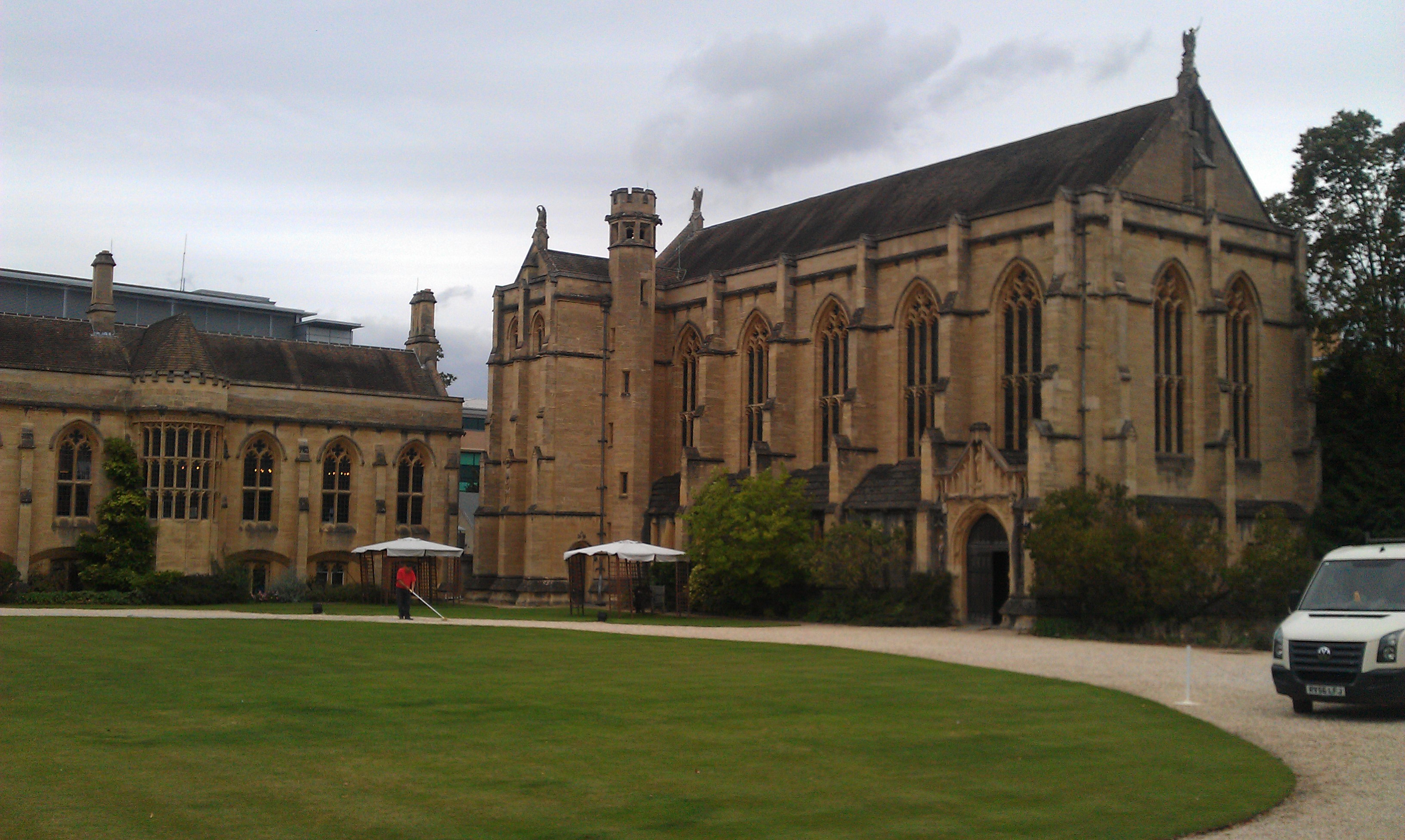
Just back from attending Making Sense of Health, Illness and Disease at Mansfield College in Oxford (6-8 September 2011). I attended this conference in 2010 and was really impressed. It’s a small conference where everyone that attends is required to present; there are no parallel sessions so conversations build over the 3 days of the conference. For 2011 conference was focusing on the theme “Chronic Illness: The Borderlands Between Health and Illness”, so I headed back with my colleague on the Growing Up with Cancer project – Peter Lewis. We talked about young people making meaning of their experience of having cancer through finding benefit. Check the draft paper out here. It was great see a few familiar faces from last year and some colleagues from Australia, and meet some interesting new people.

Presentation abstract

Title: “I Just Want to Help People”: Complicating young cancer survivors’ accounts of “being a better person”

Authors: Peter Lewis, Julie Mooney-Somers, and Ian Kerridge

Abstract: According to qualitative research with adult cancer survivors, the experience of survival is said to be characterised by (among other things) a diffuse sense of indebtedness. Survivors thus sometimes engage in activities that are designed to “give something back” to the communities or to the health care system that helped them to survive. This paper examines whether expressions of indebtedness and/or actions undertaken to “discharge” or “repay” the debt are evident in young people’s accounts of survival. The findings are based on semi-structured interviews conducted with 28 cancer survivors aged 16-30 years. Study participants spoke about becoming “a better person” because of their survival experience. Evidence proffered in support of this included intentions to be helpful or supportive, aspirations to do good works in the future, and descriptions of actual acts of charity, support for peers, and telling their story to help other young people with cancer. Participants also claimed that their personal experience gave them special insight and wisdom into problems experienced by their peers. Moreover, they often contrasted their own attempts to be a better person with a perceived lack of this desire, or associated actions, among their peers. So while young cancer survivors did not speak of indebtedness they did express a desire to do good deeds for their local and broader community, a desire that they attributed to their cancer experience. We will argue that the ways participants described enacting “being a better person” in their daily lives and the ways they used this to differentiate themselves from their peers, contributed to the development of their cancer survivor identity. We will end our presentation by considering how the social, cultural and developmental contexts of these young cancer survivors’ lives may be implicated in the way they choose to undertake this ongoing identity work.

Growing Up with Cancer Melbourne

I’m in Melbourne tomorrow with the Growing Up with Cancer team to run a self portrait workshop at the CanTeen offices. We have 8 young people who have had a cancer diagnosis coming along to work with our artist (Kris Smith) to create a self portrait. The documentary team (Virus Media) are coming along to film the workshop and chat with some of the young people about their experiences (check out the promo video for the documentary below)