GUWC presents at Youth Health 2011

The Growing Up with Cancer research project had a few appearances at the wonderful Australian Adolescent Health conference (aka Youth Health: It’s totally important).

My colleague Peter Lewis spoke in the youth cancer session about young cancer survivors making meaning and finding benefit from their cancer experiences.

Making meaning and finding benefit: Young people’s reflections on survival after cancer

Lewis, P, Mooney-Somers, J, Jordens, CFC, and Kerridge, I

Qualitative research with adult cancer survivors has reported that survivors engage in activities that are designed to “give something back” to the community or to the health care system that helped them survive. This paper examines whether expressions of indebtedness and/or actions undertaken to “repay” the debt are evident in young people’s accounts of becoming a cancer survivor.

This paper is based on our findings from 47 semi-structured interviews conducted with 27 cancer survivors (16-30 years old) who were diagnosed between 10 and 22 years. Participants described how their experiences gave them special insight and wisdom into problems experienced by their peers and that this motivated them to help others. We will discuss three themes; Cancer as transformation, Accounts of intentions to act as a better person, and Accounts of acting as a better person.

The literature suggests that one way cancer survivors make sense of their experience is to determine how the experience was beneficial for them. We will argue that the ways participants in our study described enacting “being a better person” in their daily lives can be understood as a strategy for disseminating the benefits of the wisdom and insight that they had gained from being treated for cancer. That is, they are engaged in finding benefit rather than repaying a debt as described in adult cancer survivors.

We also had two posters:

Becoming a survivor – young people disclosing cancer to new friends and romantic partners

Lewis, P and Mooney-Somers, J

The Growing up with Cancer study aimed to explore the effects of a cancer diagnosis during adolescence on young people’s developing identity, relationships, agency, and autonomy. This paper focuses on how cancer affected young people’s developing friendships and romantic relationships.

We conducted 47 semi-structured interviews with 27 young people (16 to 29 years) who had been diagnosed with various cancers and haematological malignancies when aged 10 to 22 years. Interview data were analysed using a symbolic interactionist perspective.
Participants described fears around possible consequences of introducing their cancer history into new friendships and particularly for young men, romantic relationships. This contrasted with positive experiences reported by many (especially young women) of establishing new friendships and romantic relationships and implementing successful disclosure strategies.

Disclosing a cancer history in new relationships is an important step in becoming a cancer survivor. In contrast to negotiating a cancer survivor identity with family or existing friends, new friends and romantic partners offer a clean slate where young cancer survivors can decide when and who to tell about their cancer, and experiment with the presentation of a post-cancer self.

Our findings suggest that part of survivorship for young people is working out how cancer contributes to their identity so they can provide an account of themselves. It may be important for young people to have opportunities for disclosure early in their survivorship and discussion with more experienced survivor peers about strategies for positive disclosure outcomes.

Picturing cancer survival: young people’s self portraits of the impact of cancer on growing up

Mooney-Somers, J and Smith, K

The Growing up with Cancer study used multiple methods to explore the effects of a cancer diagnosis during adolescence on young people’s developing identity, relationships, agency, and autonomy. Nineteen young people (16 to 29 years) diagnosed with various cancers and haematological malignancies when aged 10 to 22 years, worked together with a digital media artist to create a self portrait of themselves and their cancer journey. They participated in one or more full day creative workshops and engaged with the artist via telephone, email and online live collaboration software. The period of engagement in creative activities varied from a participation in a single workshop to working with the artist for several months. This process presented an opportunity for young people to reflect on experiences of cancer and growing up.

Nineteen young people produced 21 self portraits using mixed media, graphic, photographic, and musical techniques. The creative process and the resulting self-portraits are far more than simply research data. They standalone as pieces of art to tell a compelling story of the complex and contradictory nature of dealing with a life threatening illness during a time of significant flux, when identity formation is foreground.

We propose to display a suite of five posters (each A0 size) comprising four posters displaying 20 visual self portraits.

Sorry I can’t display the self portraits posters here (yet!).
I finished my Graduate Certificate in Educational Studies (Higher Education) – hurrah!

22 October 2011

Yesterday I sat in a large seminar room with 40 other teachers at the University of Sydney. It was the culmination of our year together on the Graduate Certificate in Educational Studies (Higher Education). Fourteen groups presented on inquiry projects we’ve each undertaken this semester.

When I first started the Grad Cert I assumed the people taking the course would – like me – be newbies looking for practical guidance from the experts. I did find some relatively new to lecturing, but many others had years of experience and wanted to think deeply about what they were doing in their teaching and how to make it better. The opportunity to spend time with all of these intelligent, engaged and curious colleagues who have dedicated themselves to teaching was the unexpected bonus of the Grad Cert. The seminar yesterday was like our very own TED talk – someone really clever thought really hard about something that was troubling them and offered me their insights. I heard much that resonated with challenges I’m experiencing right now and an idea or two that will needle for some time.

We looked to our lecturers as models of good reflexive teaching and as a group of academics we were hard to please, opinionated and highly critical. Our in-class discussions were robust, but like all good disagreements they pushed us to articulate a position. Discussions with peers continued out of the classroom doors and down the stairs and on a few occasions back to the office to colleagues who weren’t doing the Grad Cert.

Over the last year I’ve been challenged to think about my teaching, unpack assumptions about the relationship between teaching and learning and really think about what my job is as a teacher for adult learners. The combination of theoretical, reflective and applied work produced some immediate changes to my teaching and opened up some lines of thought that will take a while to work through. Immediate changes included cutting material and readings to leave more room for discussion, building content around examples – in most cases mine or someone else’s research, and being less afraid to ask students for feedback. Asking students if they get something risks hearing that they don’t, and having to try again, and maybe again. This can be quite a confronting experience. My most painful teaching memory this year is also my proudest – material I knew but wasn’t sure I could teach, that took several goes from different directions before I felt the students go it. When they started making jokes about their epistemological positions I knew we were there! Building up confidence around getting student feedback is undoubtedly a longer term project. I didn’t get a teaching philosophy from the Grad Cert, but it did help me articulate one. Despite reading scholarly texts, and hearing about theories of teaching and more than enough buzz words from University policy, my philosophy was simple and resonated with why I do the research I do. It was a revelation to discover that my teaching philosophy was as much about who I am and what I value as it was about learning and teaching theory.

I took on the Grad Cert this year because I felt I needed some guidance in my teaching. I had been given the task of coordinating and lecturing on four postgraduate units. I was dealing with University bureaucracy, a whole new curriculum and trying to be a ‘good’ teacher. I has been hard work. I worked on weekend days to finish assignments, cursed my colleague Rowena for convincing me it would be a good idea, and had many doubts about my teaching while I worked out what I was doing (a little bit of insight can be a dangerous thing). But in so many other ways the Grad Cert has given me a room of my own, a space to work out what I am doing, how I am doing it and crucially, understand why I am doing it. This has transformed me as a teacher, and perhaps also as a learner.

Lesbian Health Advisory Committee

13 October – I was a founding member of the committee (back when it was a Board Advisory Group) in 2008, and was privileged to be involved in finalising “Turning Point: ACON’s Lesbian Health Strategy”. The strategy is, I think, the first in the world and was developed by the incredibly passionate staff at ACON. It has guided their work since.

After a hiatus in 2010-2011, the committee has restarted. A highlight of last night’s meeting was hearing about the work undertaken within the framework of the strategy. In particular the amazing partnership between ACON and the Cancer Council NSW. Together they have produced a variety of lesbian specific resources, the C-word forum and the long running C-word – a cancer support group for lesbians and their partners, and lesbian identified volunteers on the Cancer Council’s “Cancer Connect” volunteer service. Definitely a model for others.

Check out the kind of services and programs provided by ACON Women’s Health.

International Visual Methods Conference

Just back from the 2nd International Visual Methods Conference that was held at the Open University campus in Milton Keynes (13 – 15 September 2011). I managed to pull off a multimedia presentation with my colleague Kris Smith – the artist on the Growing Up with Cancer project. Kris appeared by pre-recorded video, I appeared in person and we showed the self portraits from the project. A very positive reception – lots of questions and interest to hear more.

Presentation abstract

Title: Beyond the Illustration of Research Data: Using professionally facilitated image making techniques to enable participants to describe, enhance and extend data originally captured using traditional text-based methods of research.

Authors: Julie Mooney-Somers (Centre for Values, Ethics and the Law in Medicine, University of Sydney) and Kris Smith (School of Drama, Fine Art and Music, University of Newcastle)

Abstract: Our research involved 20 cancer survivors (aged 15-30 years) participating in research and creative activities. In conversation with a researcher, they produced a narrative account of their experience of growing up and having cancer. Working with a visual artist, they created self-portraits; mixed media, graphic, photographic, and musical representations of themselves and their cancer journey. The interviews provided material for the generation of self-portraits, while exploratory work during the creative process generated reflections for subsequent interviews. By aligning and reconfiguring an image to almost literally match an aspect of an experience, each person’s understanding of the nuances of these aspects was enhanced in unexpected ways. Often a composition or colour was rejected by the participant, not for aesthetic reasons but because it couldn’t adequately portray aspects of the experience. Sophisticated and nuanced, these works express the complex and contradictory nature of dealing with a life threatening illness during a time of significant flux, when identity formation is foreground. These self-portraits were far more than a catalyst for a subsequent research interview, they standalone as pieces of art. Our presentation will take the form of a conversation between researcher (in person) and artist (pre-recorded video), with reference to the self-portrait images.

Making Sense of Health, Illness and Disease Conference

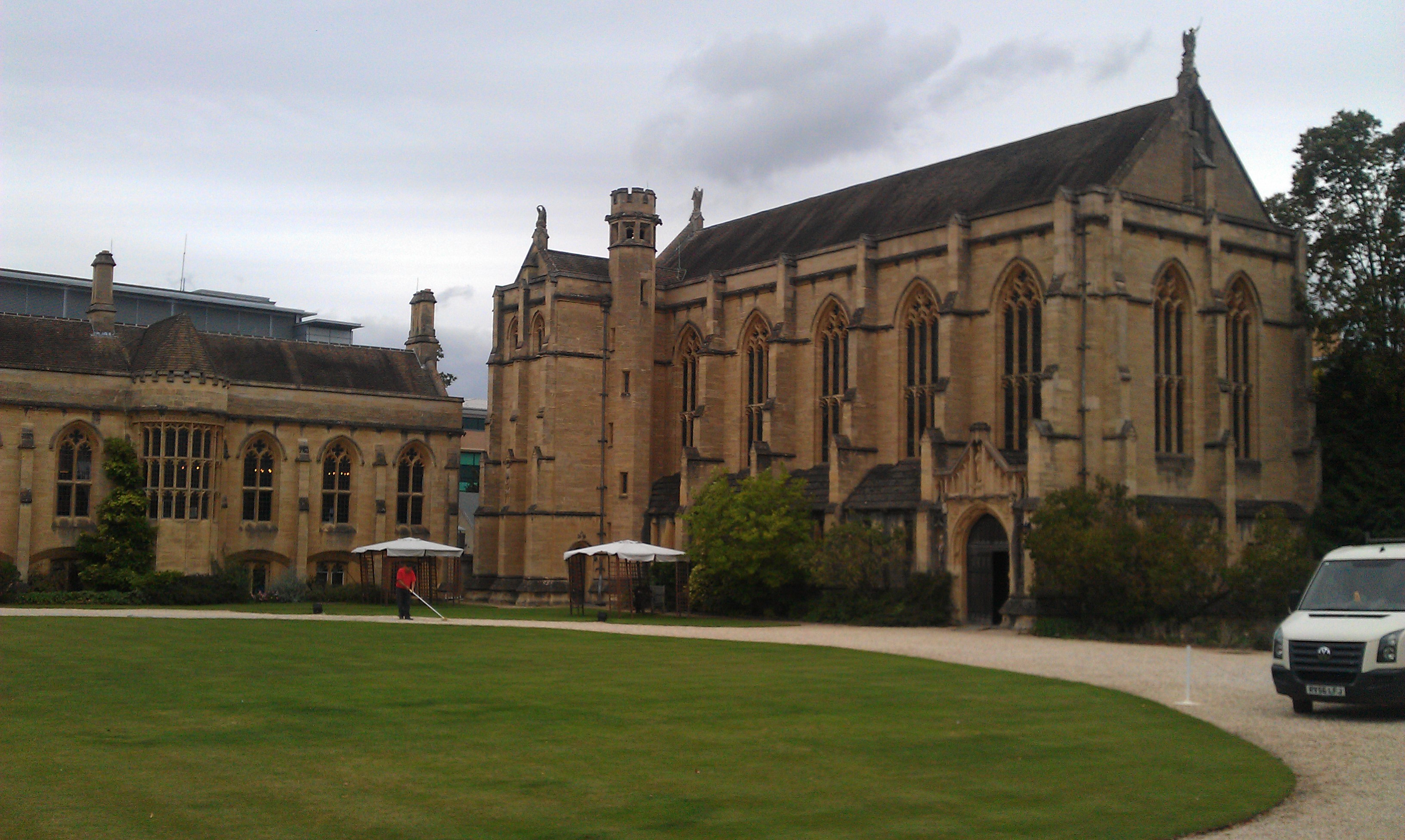
Just back from attending Making Sense of Health, Illness and Disease at Mansfield College in Oxford (6-8 September 2011). I attended this conference in 2010 and was really impressed. It’s a small conference where everyone that attends is required to present; there are no parallel sessions so conversations build over the 3 days of the conference. For 2011 conference was focusing on the theme “Chronic Illness: The Borderlands Between Health and Illness”, so I headed back with my colleague on the Growing Up with Cancer project – Peter Lewis. We talked about young people making meaning of their experience of having cancer through finding benefit. Check the draft paper out here. It was great see a few familiar faces from last year and some colleagues from Australia, and meet some interesting new people.

Presentation abstract

Title: “I Just Want to Help People”: Complicating young cancer survivors’ accounts of “being a better person”

Authors: Peter Lewis, Julie Mooney-Somers, and Ian Kerridge

Abstract: According to qualitative research with adult cancer survivors, the experience of survival is said to be characterised by (among other things) a diffuse sense of indebtedness. Survivors thus sometimes engage in activities that are designed to “give something back” to the communities or to the health care system that helped them to survive. This paper examines whether expressions of indebtedness and/or actions undertaken to “discharge” or “repay” the debt are evident in young people’s accounts of survival. The findings are based on semi-structured interviews conducted with 28 cancer survivors aged 16-30 years. Study participants spoke about becoming “a better person” because of their survival experience. Evidence proffered in support of this included intentions to be helpful or supportive, aspirations to do good works in the future, and descriptions of actual acts of charity, support for peers, and telling their story to help other young people with cancer. Participants also claimed that their personal experience gave them special insight and wisdom into problems experienced by their peers. Moreover, they often contrasted their own attempts to be a better person with a perceived lack of this desire, or associated actions, among their peers. So while young cancer survivors did not speak of indebtedness they did express a desire to do good deeds for their local and broader community, a desire that they attributed to their cancer experience. We will argue that the ways participants described enacting “being a better person” in their daily lives and the ways they used this to differentiate themselves from their peers, contributed to the development of their cancer survivor identity. We will end our presentation by considering how the social, cultural and developmental contexts of these young cancer survivors’ lives may be implicated in the way they choose to undertake this ongoing identity work.

My first ACON Ethics Committee

17 August – honoured to attend my first meeting of the ACON Ethics Committee. The committee covers research that targets GLBT populations, either as their sole sample group or as an identified sub-sample, people with HIV or those who provide their care and support or people who work in the sex industry, or research that in general concerns issues relating to HIV/AIDS, GLBT or sex worker health.

Annual meeting of REACCH


15 & 16 August 2011 – the annual face to face meeting of the Research Excellence in Aboriginal Community Controlled Health was held at Crowne Plaza Hotel, Coogee. We spent two sunny days talking and planning. It was great to catch up with everyone from last year, hear about progress and make great plans for the coming three years.

Qualitative Health Research in Difficult Contexts

3 June 2011 – A wonderful day! My colleague Anna Olsen – from the National Centre in HIV Epidemiology and Clinical Research, UNSW – and I coordinated a whole day workshop about conducting qualitative health research in difficult contexts. Held in Medical Foundation Building Auditorium, University of Sydney, the day was supported by The Centre for Values, Ethics and the Law in Medicine (VELiM) University of Sydney, International Institute for Qualitative Methodology, University of Alberta, and the Qualitative Health Research Collaboration, University of Sydney.

Program
Qualitative research is valued for its ability to capture the depth and complexity of social phenomena, particularly in real-world settings, addressing issues and processes that quantitative research cannot reach. As a consequence, qualitative researchers are often engaged in challenging research design and fieldwork. This workshop brings together experienced qualitative researchers to discuss the ethics, protocols, methods and relationships that influence the success of qualitative inquiry in difficult contexts. Speakers will share examples of hazards, unforseen hurdles and even unresolvable situations, as well as strategies for dealing with these in the everyday conduct of the research and the final write up.

Researching in community spaces:
Dr Martin Holt (Senior Research Fellow, National Centre in HIV Social Research, UNSW) Qualitative research with gay men: The contrast between consumer & public health perspectives on community, risk & HIV
Professor Kathleen Clapham (Australian Health Services Research Institute, UoW) Who defines ‘difficult’? Researching with Aboriginal communities
Dr Julie MacKenzie (Research Associate, School of Public Health and Community Medicine, UNSW) Football United: Research with young refugees in high schools and Intensive English Centres

Researching in institutions:
Dr Rowena Forsyth (Research Fellow, Centre for Values, Ethics and the Law in Medicine, USyd) Ethnography in hospitals
Dr Ann Dadich (Research Lecturer, Centre for Industry and Innovation Studies (CInIS) Research Group and School of Management College of Business and Law, UWS) Tricks of the Trade in Community Mental Health Research
Dr Linda Kurti (Director of Social Policy, Urbis) Learning from organisations – evaluation and research in the workplace
Dr Juanita Sherwood (Senior Lecturer & Senior Researcher, Nura Gili Indigenous Programs, UNSW and Perinatal and Reproductive Epidemiology Research Unit, School of Women’s and Children’s Health, UNSW) The Alice Springs Grog Trial

Researching internationally:
Dr Cynthia Hunter (Senior Lecturer, School of Political and Social Sciences, and Public Health, USyd) Ethnographic work on primary health care in Indonesia
Dr Peter Higgs (NHMRC Post-doctoral Fellow, Kirby Institute, UNSW) Engagement, reciprocity and advocacy: Research with injecting drug users in Vietnam

Keynote:
Associate Professor Juliet Richters (School of Public Health and Community Medicine, UNSW) Medical faculties as contexts for qualitative health research

Young Women’s Health Study Writing Retreat

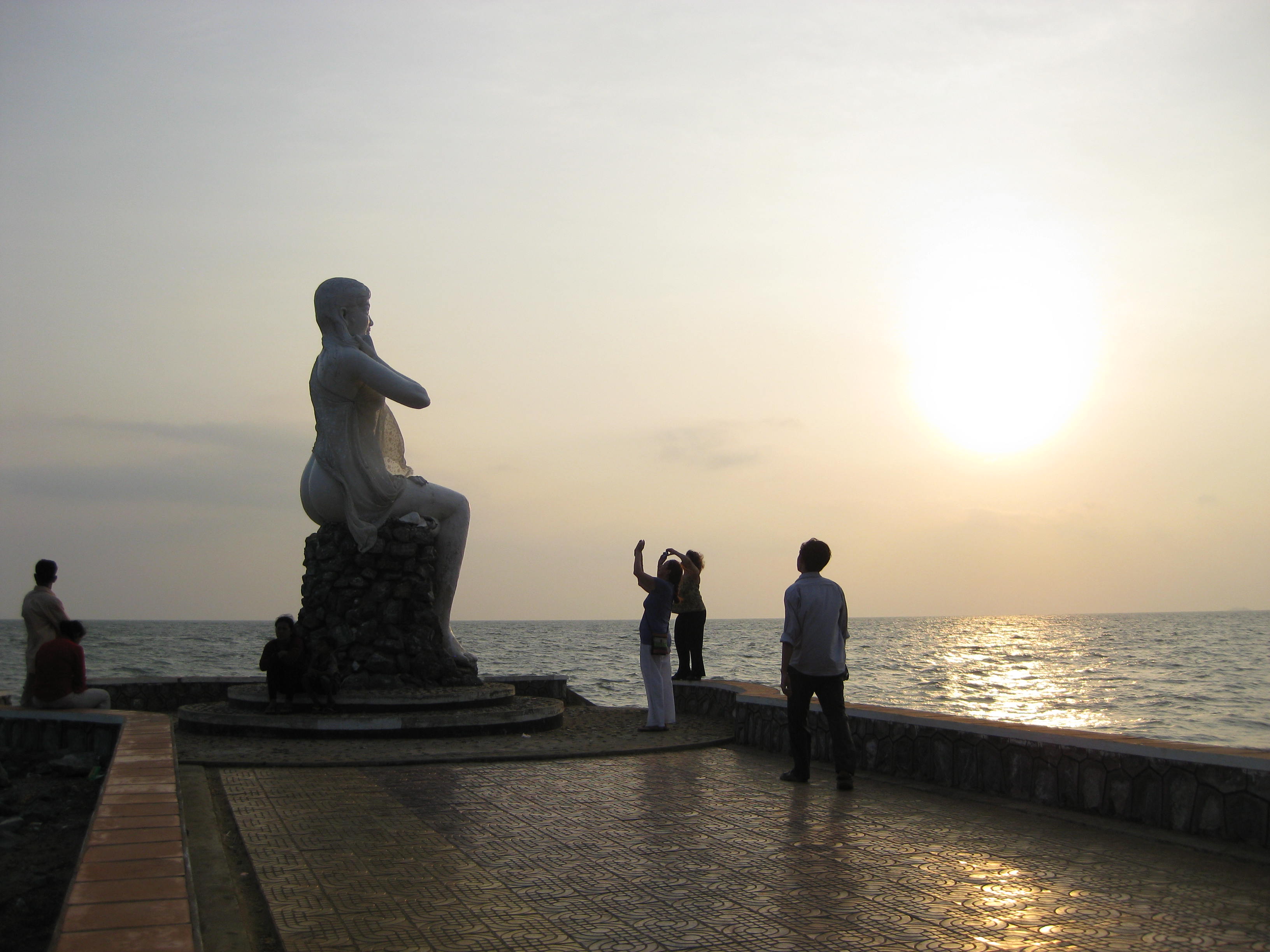
I spent the second week in February at the Vine Retreat near Kep, in Cambodia. This was a very productive writing retreat for the members of the Young Women’s Health Study. It was wonderful to spend time with Kim Page, Ellen Stein, Marie-Claude Couture and Jennifer Evans, from the Centre for AIDS Prevention Studies, University of California San Francisco; Tooru Nemoto from the Public Health Institute, California; Pisith Phlong from the Royal University of Fine Arts, Phnom Penh; Melissa Cockcroft from the Cambodian Women’s Development Agency, Phnom Penh; and my old boss Lisa Maher from the National Centre in HIV Epidemiology and Clinical Research, University of New South Wales. We were a 20 minute drive (longer by tuk tuk!) from Kep, a seaside resort near the border with Vietnam. Kep used to be a very luxury resort town (1900-1960s) but has been a virtual ghost town during the Khmer Rouge years (things are picking up again with some stunning restaurants and crab shacks). Exciting things to see in Kep include the giant crab statue and the Lady of Kep (or White Lady) on the beach.

New Job!

In February I started a new part time position as Senior Lecturer in Qualitative Health Research (meaning I am now fulltime at the University of Sydney). My primary responsibilities are to coordinate and teach the Qualitative Health Research program, within the School of Public Health at the University of Sydney. We have provide four units of study (Introducing Qualitative Health Research, Qualitative Methodologies & Study Design, Qualitative Research: Analysis & Writing, and Qualitative Health Research Project) delivered in intensive full day workshops across the year. The program can be taken as a Graduate Certificate, Graduate Diploma or Masters and was first delivered in 2010. Our first Graduate Certificate student graduates in May 2011.